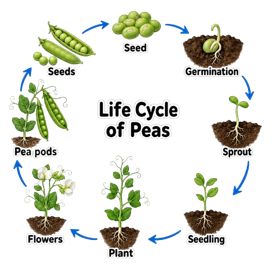
How Peas Grow
The Little Pea’s Climbing Journey
The Curly Sprout
Deep inside the cool spring soil, the growing process begins as a sturdy green shoot breaks through the dirt. It uncurls its very first leaves, stepping out into the fresh air to catch the early morning light (Courtier, 2011).
Reaching Out Green Fingers
As the vine grows taller, it creates special curly threads called tendrils. These look like tiny green fingers reaching through the air, wrapping themselves tightly around sticks or fences to help the plant climb high and stay safe (Courtier, 2011).
Drinking in the Goodness
While the vines climb upward, the roots work hard underground. They anchor the plant firmly and drink up water, helping the pea plant build lots of plant-based proteins that make our muscles grow big and strong (Love Food Editors, 2016).
White Butterfly Blossoms
Soon, beautiful white flowers open up all along the climbing vine. They look like little butterflies resting among the green leaves, waving in the breeze and signaling that the peas are on their way (Courtier, 2011).
The Secret Green Sleeves
When the white flowers say goodbye, they leave behind tiny flat green jackets. These are baby pea pods, which act like protective sleeping bags for the future peas growing inside (Courtier, 2011).
Plumping the Sweet Marbles
Inside the protective pods, the individual peas grow rounder, fatter, and juicier. They pack themselves full of healthy fiber and immune-boosting vitamins that help keep our bodies active and full of energy (Love Food Editors, 2016).
The Full Pocket
With plenty of sunshine, the pods swell until they are completely round and firm. You can feel the neat row of plump, sweet pea marbles lined up perfectly inside their green pocket (Courtier, 2011).
The Crunchy Pop!
When the pods are bright green and full, it is time to pick them! With a gentle snap off the vine, the pods are ready to be opened. Pop them open to find a row of sweet, crunchy peas ready to eat (Courtier, 2011).
📚 Embedded Source Documentation
- Courtier, Jane. Fast, Fresh Garden Edibles. Creative Homeowner, 2011, pp. 124-127. (Utilized for precise chronological data on vine germination, climbing tendril mechanics, flower blossom intervals, pod formation, and swelling indicators for harvest maturity).
- Love Food Editors. 100 Best Health Foods. Parragon Books LTD, 2016, p. 78. (Utilized for mapping the seed-filling and pod-plumping stages to specific pediatric health benefits, including legume protein synthesis, dietary fiber profiles, and metabolic energy values).
Historical facts ;
Peas are one of the oldest crops grown by people. They were first cultivated in and around the Fertile Crescent, a region in Southwest Asia where some of the earliest farmers lived. Peas spread west through Europe and later traveled across the world, becoming a favorite garden plant because their sweet little seeds grow inside neat green pods