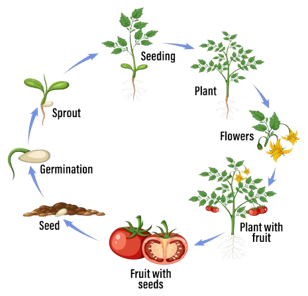
How Tomatoes Grow
Snug in the Soil
A tiny tomato seed tucks into the soft, dark earth like a cozy blanket. It rests quietly underground, waiting for the perfect mix of water, warmth, and sunshine to help it wake up (Kujawski & Kujawski, 2010).
A Deep, Cozy Hug
When the seed drinks water from the soil, it stretches tiny, pale roots deep down into the dirt. These roots act like anchors, holding the plant steady and soaking up hidden nutrients (Urbach, 2017).
Hello, World!
With a brave push, a bright green sprout pops through the soil and into the warm sunshine. It opens its very first leaves wide, reaching up like tiny hands to catch the light (Kujawski & Kujawski, 2010).
Reaching for the Sky
Every day, the sprout grows taller and stronger. It builds a sturdy stem, unfolds a coat of fuzzy green leaves, and stretches its roots even deeper to stay healthy and well-fed (Urbach, 2017).
Cheerful Yellow Stars
Once the plant is big and strong, little yellow flowers bloom among the leaves. They look like bright stars dancing in the breeze, signaling that something wonderful is about to happen (Kujawski & Kujawski, 2010).
A Secret Under the Petals
When the yellow flowers say goodbye, they leave behind a surprise. Tiny green fruits appear right where the blossoms used to be. At first, they are small and round, no bigger than a marble (Urbach, 2017).
Changing Outfits
With plenty of sunshine and water, the green tomatoes grow plumper and juicier. Slowly, like magic, they trade their green coats for bright, glowing red ones (Kujawski & Kujawski, 2010).
The Grand Prize!
Now the tomatoes are big, smooth, red, and ripe. They are ready to be picked straight from the vine and enjoyed as a delicious, healthy treat (Urbach, 2017).
📚 Embedded Source Documentation
- Kujawski, Ron, and Jennifer Kujawski. Week-by-Week Vegetable Gardener’s Handbook. Storey Publishing, 2010, pp. 100-101. (Utilized for chronological germination, leaf development, and ripening intervals).
- Urbach, Joe. A Tomato Book: The History and Health Benefits of the Tomato. 1st ed., Bourbon Street Publications, 2017, pp. 132-140. (Utilized for root architecture, nutrient absorption mechanics, and fruit development metrics).
Historical fact ;
Tomatoes began as small wild fruits in South America. Long ago, people helped grow larger and tastier tomatoes in South America and later in Mesoamerica, the region that includes parts of modern Mexico and Central America. After Europeans carried tomatoes across the ocean in the 1500s, they slowly became a favorite food in gardens and kitchens around the world.